
Psychogenealogy and family constellations: why your family story matters
What is psychogenealogy?
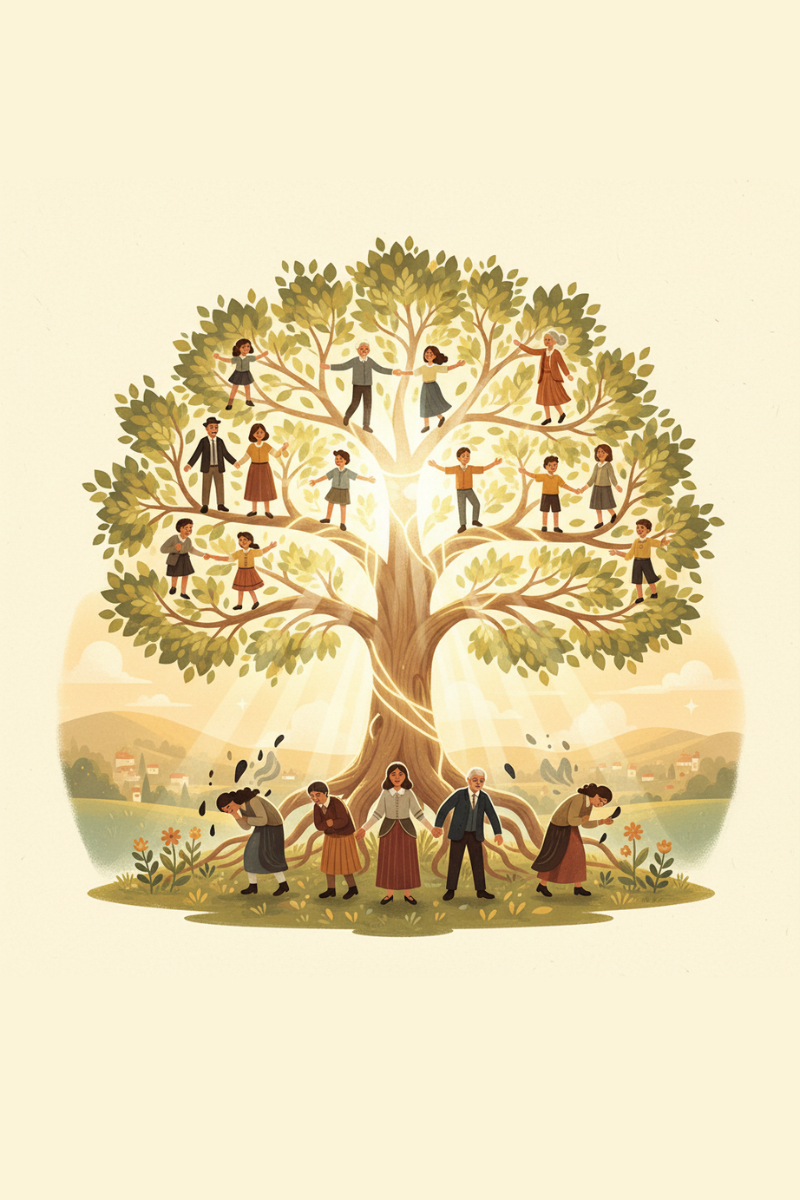
Psychogenealogy is an approach that shows us what we live today does not actually start with us, but is deeply connected to the stories, traumas and invisible loyalties in our family system, across several generations. It goes beyond a simple family tree with names and dates and looks at emotions, key events, secrets, exclusions and repeating patterns.
Through psychogenealogy, we begin to see how fears, relationship difficulties, money struggles or health issues can have roots in an unprocessed family history: losses, war, migration, shame, injustice, unfinished grief. It is not about blaming parents or ancestors, but about gaining context and meaning.
For people living in Belgium – especially in multicultural, bilingual or expatriate contexts – psychogenealogy can be particularly relevant. Many families carry histories of migration, separation, political change or cultural displacement, and these experiences can unconsciously shape how we relate, work, love and feel safe in the world.
Why psychogenealogy matters in Belgium?
Belgium is a meeting point of languages, cultures and histories. Families here often have:
- parents and children speaking different mother tongues;
- stories of migration from Romania, France, the Netherlands, Morocco, Congo and many other countries;
- memories of war, occupation, colonial history or political tensions;
- patterns of “living between worlds” – between countries, cultures or religions.
These layers of experience do not disappear just because the family changes country or starts a “new life”. They remain present in the family field and can show up as:
- a chronic sense of not belonging fully anywhere;
- difficulty choosing a direction in life or committing to a place;
- repeating patterns of burnout, overworking or self-sacrifice;
- inner conflicts between loyalty to the family of origin and personal need
Psychogenealogy in Belgium becomes a way to honour both the roots and the new land: to understand how the past influences the present, and to create a more conscious way of living here and now.
The genogram – your first family map
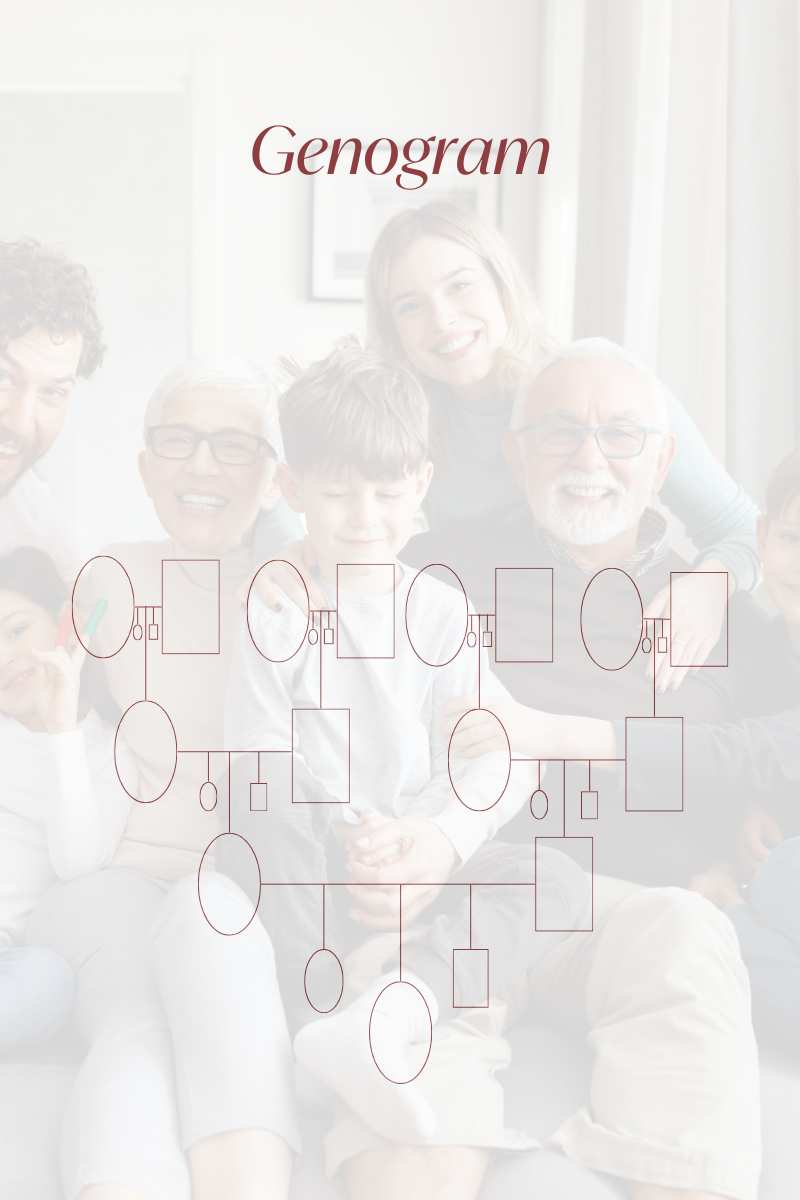
One of the basic tools in psychogenealogy is the genogram. A genogram is more than a classical family tree. It includes:
- important events (marriages, divorces, early deaths, miscarriages, migration, bankruptcy, serious illnesses);
- patterns of illness that repeat in the family;
- relationship dynamics (closeness, rupture, exclusion, alliances);
- emotional themes (violence, addiction, sacrifice, silence, shame).
Starting with three generations – you, your parents and your grandparents – a genogram helps you see the bigger picture:
Where do stories repeat? Who seems to be “forgotten” or rarely mentioned? Where do similar losses or conflicts appear again and again?

We do not start our story from zero. We carry invisible chapters written by those who came before us – and healing begins the moment we dare to read them with love instead of judgment.
For people in Belgium coming from other countries (for example, Romanian families living in Brussels, Leuven, Antwerp or Liège), the genogram also helps to connect the “country of origin story” with the “Belgian chapter” of the family. You can map:
- when and why the family migrated;
- what was lost and what was gained;
- who stayed behind and how that affects those who left.
This map is an excellent starting point for deeper work in family constellations or therapy.
Benefits of psychogenealogy and family constellations
For people living in Belgium – especially in multicultural, bilingual or expatriate contexts – psychogenealogy can be particularly relevant. Many families carry histories of migration, separation, political change or cultural displacement, and these experiences can unconsciously shape how we relate, work, love and feel safe in the world.
When we work with psychogenealogy, genograms and family constellations, important shifts can happen:
- We understand why we repeat certain patterns and stop blaming ourselves so harshly.
- We can distinguish what is truly ours from what belongs to parents, grandparents or previous generations.
- We release roles like “the strong one”, “the saviour”, “the sacrificed child” and come closer to our authentic self.
- We create more space for healthy relationships, fulfilling work and a more relaxed connection with money and success.
- We offer a different legacy to our children: less unconscious burden, more clarity and emotional freedom.
This work brings healing not only to us as individuals, but also to future generations. When we bring order and awareness into the family field, our children and grandchildren do not have to carry the same weight in the same way.
Related Articles
What is the Ego?
The invisible wall between survival and inner peace. Have you ever wondered why, no matter how much you achieve, there is still that inner voice whispering that you are "not enough"? Or why you feel exhausted trying to maintain a flawless image in front of others? The...
5 signs of emotional burnout and solutions that worked for me
Navigating emotional burnout can feel like carrying a heavy weight every day, but there is hope and a path to renewal. If you’re feeling persistently tired, overwhelmed by your emotions, or disconnected from what once brought you joy, remember that healing is...
My journey to Armonia: healing, connection, and coming home to myself
Nothing in life really happens by chance. Every step we take—even the uncertain ones—shapes the path back to who we truly are. This is the story of my journey—one marked by hardship, healing, and ultimately, hope.From a young age, life was far from easy. Growing up, I...