
Limiting beliefs: what they are and how they affect your life
THETAHEALING® · SUBCONSCIOUS · TRANSFORMATION
Sometimes, it’s not reality that holds you back, but what you’ve learned to believe about yourself and life.
You may want a fulfilling relationship, yet part of you is afraid to trust. You may want to earn more, but believe that money only comes through hard work and sacrifice. Or perhaps you know exactly what you need to do, but when it’s time to take the next step, fear, self-doubt or procrastination gets in the way.
Behind these reactions, there may be limiting beliefs — deeply held ideas and beliefs about ourselves, other people and the world that we have come to perceive as true.
Some are conscious. Others operate so automatically that we may not even realize how much they influence our choices, reactions and the way we experience life.
Online 1:1
70€
1 hour
What are limiting beliefs?
Limiting beliefs are beliefs or conclusions about yourself, other people, or how life works that can restrict the way you perceive your choices and possibilities.
They can sound very simple:
- I’m not good enough.
- I don’t deserve it.
- I’m not safe.
- I can’t trust people.
- I have to do everything on my own.
- Money is hard to earn.
- To be loved, I have to please others.
- If I become successful, I’ll lose the people I love.
The challenge is that we rarely go through life consciously repeating these statements to ourselves.
Instead, limiting beliefs can show up through our choices, emotions, reactions, and recurring patterns of behavior.
Where can our beliefs come from?
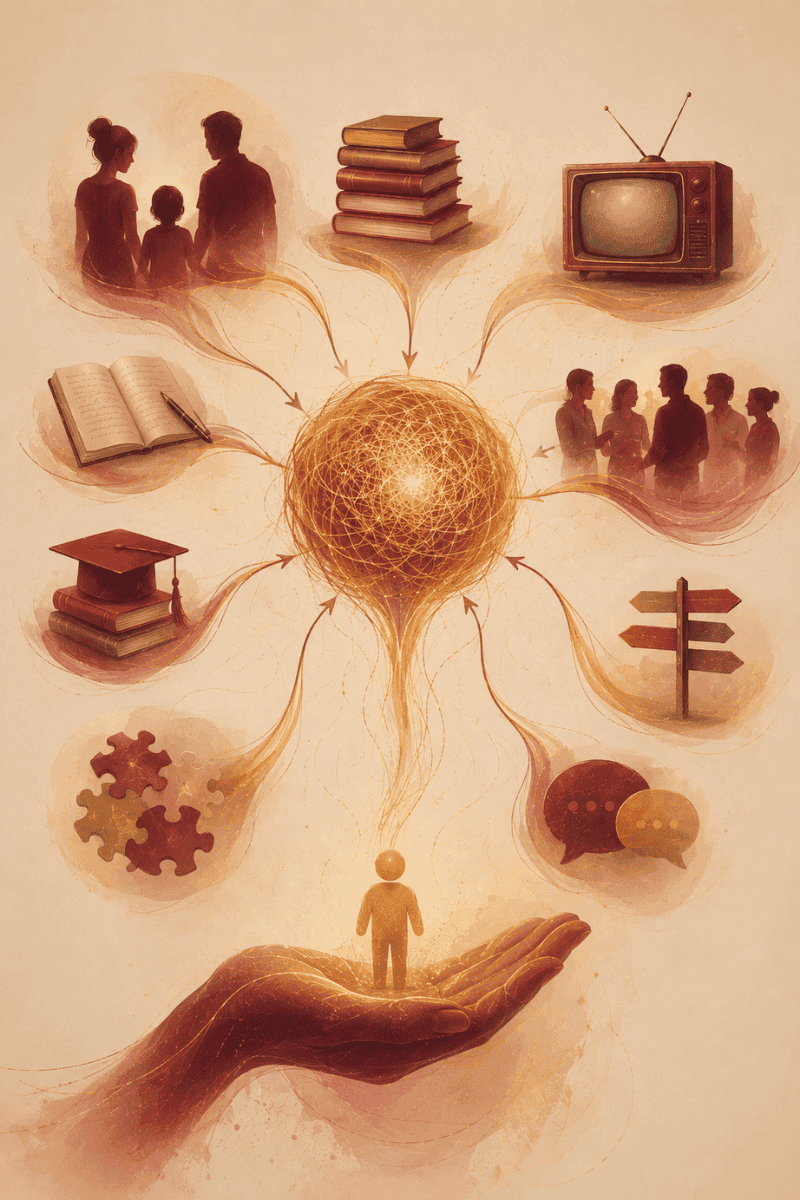
Beliefs can develop from the experiences we go through and the meaning we give to them. Some form early in life, others develop later, and many are shaped by the people, relationships and environments around us.

Childhood experiences
Our early experiences of love, safety, rejection and belonging can deeply influence the beliefs we develop about ourselves, other people and the world around us.
Relationship with your mother
Our relationship with our mother can influence how we learn to receive love, experience emotional safety, care for ourselves, and develop a sense of self-worth.
Relationship with your father
Our relationship with our father can influence beliefs around trust, authority, validation, boundaries, success, and the way we relate to the world.
Family and learned patterns
We observe and internalize messages about money, love, work, success, sacrifice, and family roles, even when these messages are never expressed directly.
Difficult emotional experiences
Rejection, abandonment, loss, humiliation, failure or conflict can lead us to form beliefs that help us protect ourselves from experiencing similar pain again.
Relationships and life experiences
Romantic relationships, friendships, school, and professional environments can reinforce existing beliefs or contribute to new ones about our self-worth, abilities, and what we believe is possible for us.
Culture and society
Social norms, education, community, and cultural messages can shape our beliefs about what it means to be successful, loved, “good enough,” and what we believe is possible for us.
Personal interpretation
It is not only what happens to us that matters, but also the meaning we give to the experience. Two people can go through the same situation and develop completely different beliefs.
How do limiting beliefs form?
Many of our beliefs begin to form early in life, through the way we interpret our experiences and the messages we receive from the people who are important to us.
A child does not understand and interpret the world in the same way an adult does. Instead, they try to make sense of what they experience.
If a parent is emotionally unavailable, a child may come to the conclusion:
“I’m not important.”
If they receive appreciation mainly when they achieve or perform well, they may begin to believe:
“I have to achieve in order to be loved.”
If there is a constant sense of fear or insecurity around money in the family:
“There is never enough.”
If they learn that emotional closeness is often followed by conflict or pain, they may begin to believe:
“Love hurts.”
The experience may pass, but the conclusion we formed at the time can continue to influence us long afterwards.
Examples of limiting beliefs
Limiting beliefs can appear in almost any area of life. Sometimes they are easy to recognize; other times, they may be hidden behind recurring behaviors, fears or choices.
Love and relationships
I don’t deserve to be loved
People I love always leave me
If I get too close, I’ll get hurt
I have to sacrifice myself to be loved
Money and abundance
Money is hard to earn
I don’t deserve to have more
I have to work extremely hard to make money
If I have money, I’ll lose it
Self-worth and confidence
I’m not good enough
I’m not capable
I don’t deserve it
I have to prove my worth
Safety and control
If I don’t control everything, something bad will happen
I can’t rely on anyone
I have to do everything on my own
It’s not safe for me to relax
Success and career
I’m not ready
Success isn’t for people like me
If I put myself out there, I’ll be criticized
I’m not allowed to make mistakes
Family and belonging
I have to take care of everyone
I’m not allowed to disappoint my family
If I choose a different path, I won’t belong anymore
Other people’s needs are more important than mine
Change and the unknown
It’s too late to change
It’s safer to stay with what I know
Change is dangerous
I won’t be able to handle it
Receiving, rest and your own needs
I have to be productive all the time
If I rest, I’m being lazy
It’s selfish to put myself first
I have to give something in order to receive
Can limiting beliefs be changed?
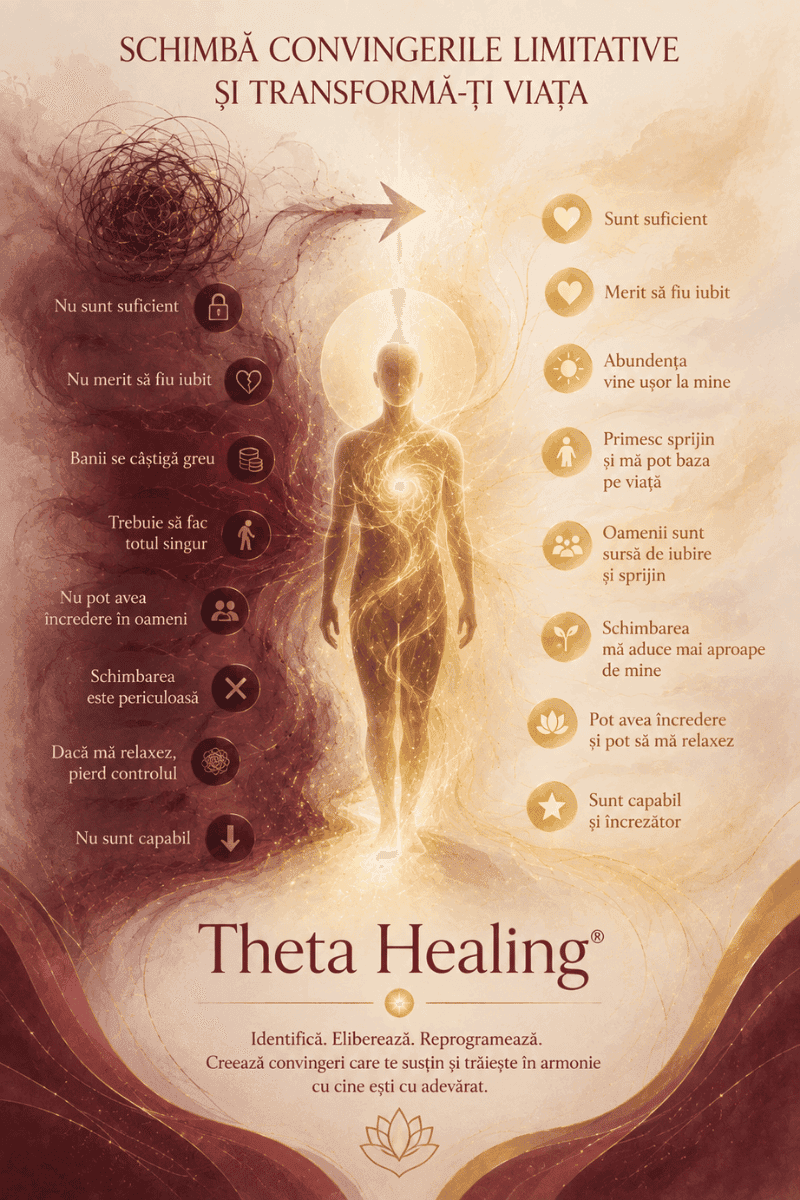
Yes. Our beliefs are not our identity.
The first step is learning to recognize the difference between:
“This is the truth.” and “This is a conclusion I learned to believe at some point in my life.”
A belief can be explored, questioned, and reframed as we gain new experiences and perspectives.
However, changing a limiting belief is not simply about mechanically replacing:
“I don’t deserve love” with “I deserve love.”
If, at a deeper level, the new statement does not feel true to you, simply repeating an affirmation may not address what lies at the root of the belief.
This is why it can be helpful to explore how the belief was formed, what purpose it may have served, and what fear or need might be underneath it.
Beyond what we see on the surface
Why is identifying a limiting belief sometimes not enough?
Becoming aware of a limiting belief is an important first step. Yet even when you understand where a pattern comes from on a rational level, you may still find yourself reacting in the same way.
Behind one belief, there may be emotions, fears, associations and deeper beliefs that have developed over time. What we notice on the surface may only be the first layer.
From the surface to the root
I can’t ask for help
If I ask for help, it means I’m weak
If I’m weak, other people can hurt me
I have to handle everything on my own to feel safe.
How do we work with limiting beliefs in ThetaHealing®?
From identifying a recurring pattern and exploring the beliefs behind it to transforming them and integrating a new perspective that supports you.

We identify the pattern
We start with the specific situation you would like to change and explore the emotions, reactions and patterns that continue to repeat.

We explore deeper
Through a series of questions, the digging process helps us move beyond the surface-level issue and explore the deeper beliefs, emotions, and associations that may lie underneath it.

We identify the belief
We identify the deeper beliefs and associations that may be reinforcing the current pattern and explore the role they may have played in your life.

We transform the belief
We work with the belief we have identified to release it and create a new perspective that better supports you in the present.

We integrate the change
Încheiem procesul prin integrarea noii perspective, astfel încât schimbarea să poată fi reflectată treptat în alegerile, reacțiile și experiențele tale.
Why Choose an Individual Theta Healing® Session Online?
A 1:1 space dedicated entirely to your topic and your process, which you can access from anywhere.
- Personalized and Deep Work – the session starts from what you want to explore and from the beliefs discovered in the process.
- Comfort and Privacy – you participate online, from your own space, in a confidential setting.
- Focus on a Concrete Topic – relationships, money, career, manifestation, fears, confidence, or any other area important to you.
Experiences After
Theta Healing® Sessions
What impressed me most about Anca is the intuition and depth with which she leads the session. She doesn’t stay at what appears on the surface, but knows how to ask the right questions until we reach the belief that truly lies behind the problem. There were moments when the answers surprised even me. It is a deep process, for those who are ready to look at themselves honestly and see beyond their own limitations.
“Anca has extraordinary intuition and knows how to get straight to the essence. In a single session I saw with clarity beliefs I had not been able to identify on my own.”
“I came to Anca with a situation I thought I already understood, but the session took me to a completely different place. Through the right questions and her intuition, I reached the deep belief that was behind my blockage. I liked that the process was natural, without feeling pushed in a certain direction. I left with more clarity and the feeling that I can make different choices.”

Who Am I?
I am Anca Monica and I accompany people on their journey of self-discovery, healing, and inner transformation.
In my practice I integrate Family Constellations, ThetaHealing®, and a holistic approach to facilitate deep processes of awareness and transformation, carried out with gentleness, respect, and authenticity.
I believe that every transformation begins the moment we have the courage to look honestly at our own story. When we understand the patterns that have shaped our lives and reconnect with ourselves, we can make more conscious choices and build healthier relationships.
My mission is to create a safe space where you feel seen, supported, and guided toward more clarity, inner freedom, and harmony.
Family Constellations
Theta Healing
Holistic Guidance
Self-Discovery
Inner Transformation
Reconnection with Self
Frequently asked questions about limiting beliefs
What are limiting beliefs, really?
Beliefs are ideas and conclusions we have formed about ourselves, other people, and the way life works. Some support us, while others can limit our choices, behaviors, or what we believe is possible for us.
A limiting belief might sound like: “I’m not good enough,” “Money is hard to earn,” “I can’t trust people,” “I have to do everything on my own,” or “If I put myself first, I’m selfish.”
However, our beliefs are not always this obvious. We can often begin to recognize them by observing how we react to situations, people, and experiences in our lives.
How can I tell if I have limiting beliefs?
Can what I judge or criticize in others reveal a belief?
Yes, sometimes. A judgment is not automatically a limiting belief, but it can offer a clue that leads us toward a deeper belief.
For example, if you judge someone who puts their own needs first as “selfish,” you might explore whether you hold a deeper belief such as “A good person has to sacrifice themselves” or “Other people’s needs should be more important than my own.”
You can ask yourself: “What do I believe this says about someone who does this?” and then “What would happen if I allowed myself to do the same?”
Your answers may reveal something much deeper than the initial judgment itself.
Why do I repeat the same patterns even when I know they are not good for me?
Because intellectually understanding a pattern and changing what is reinforcing it can be two different things.
Sometimes, a behavior that feels limiting today may once have served a protective purpose. It may have helped you avoid rejection, maintain a sense of belonging, receive love, or feel safe.
Instead of asking only “Why do I keep doing this?”, it can be helpful to explore another question: “What is this behavior trying to protect?”
Where do limiting beliefs come from?
Limiting beliefs can develop from many different sources: childhood experiences, our relationships with our parents and family, school, relationships, emotional experiences, culture, society, and the messages we receive about love, money, success, safety, and our own self-worth.
What matters is not only the experience itself, but also the meaning we gave to it.
A child who experiences the absence of a parent may come to the conclusion, “I’m not important.” The experience itself may end, but the belief formed around it can continue to influence how they approach relationships later in life.
Are all our beliefs limiting?
No. We have many beliefs that help us navigate life and can support us in positive ways.
A belief becomes worth exploring when we notice that it restricts us, keeps us stuck in a recurring pattern, or conflicts with what we want in our lives today.
The goal, therefore, is not to constantly search for “negative beliefs,” but to become aware of whether the beliefs we hold today still support the life we want to create.
Can I have a limiting belief without being aware of it?
Yes. Some beliefs are easy to put into words, while others may first become visible through our reactions and behaviors.
You may consciously say “I want to be successful,” yet feel fear whenever an important opportunity appears. Or you may say “I want a relationship,” while emotional closeness triggers an urge to withdraw.
The contradiction between what you consciously say you want and what happens when you get closer to having it can be a valuable starting point for exploration.
Can limiting beliefs be changed?
Our beliefs are not our identity, and they do not have to be treated as unchangeable truths. A belief formed in a particular context can be reassessed as our circumstances, experiences, and perspective change.
Changing a limiting belief, however, is not simply about replacing “I’m not good enough” with “I’m good enough” and repeating the new statement.
Sometimes it is important to understand why the old belief developed, what role it may have played, and what need or fear might lie underneath it.
How do we work with limiting beliefs in ThetaHealing®?
In ThetaHealing®, we can start with a specific situation: a fear, a block, a relationship, a difficulty around money, or a pattern that keeps repeating in your life.
Through a series of questions, we explore what may lie beneath the surface issue. In ThetaHealing®, this process is known as digging.
The aim is to uncover deeper beliefs and associations that may be connected to the situation you are exploring and work with them as part of the ThetaHealing® process.
Do I need to know my limiting belief before a ThetaHealing® session?
No. In fact, you may not know which belief is behind the issue you want to explore — and you don’t need to.
You can simply start with something specific: “I keep repeating the same type of relationship,” “I find it difficult to ask for the money my work is worth,” “I feel like I have to control everything,” “I struggle to say no,” or “I know what I want, but something keeps holding me back.”
From there, we can begin the exploration. You don’t need to come with the answer; you only need to bring what you would like to understand or change.
Are You Ready to Discover What Lies Beyond the Beliefs That Limit You?
Explore more about ThetaHealing®

Discover the core concepts of ThetaHealing®, explore how the method works with subconscious beliefs and patterns, and learn how you can experience ThetaHealing® in practice.
What Is Theta Healing®?
Discover the principles behind the method and how ThetaHealing® works with subconscious beliefs and patterns.
Online ThetaHealing® 1:1 session
Discover how an individual ThetaHealing® session works and how we can explore the beliefs and recurring patterns that may be limiting you.
What is the Theta state?
Discover how an individual ThetaHealing® session works and how we can explore the beliefs and recurring patterns that may be holding you back.